
Kaelene McCaull, Head of Primary
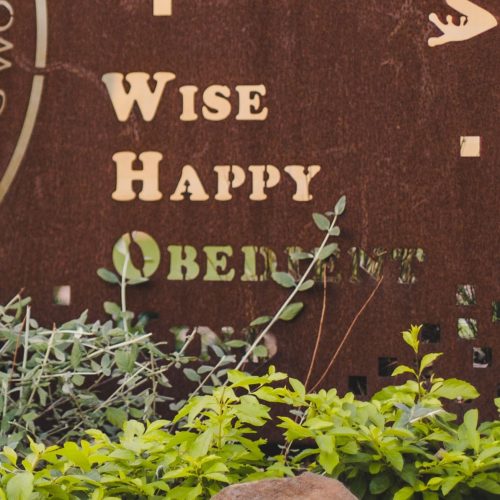
In my last broadcast, I wrote about the W.H.O.K. framework used in our primary school and how we teach our students about Wisdom. The value of an acronym like W.H.O.K. is that it is easily remembered, helping students recall important values when they need them most.
Of all the letters in our acronym, ‘Happy’ requires the most explanation. It is easy to mistake this priority for self-centeredness or people-pleasing, but that is not what we mean when we refer to Happy in this context.
When we talk about Happy, we are referring to a deep sense of Joy that transcends temporary feelings. The Bible teaches that joy is an inward, spiritual reality, tied to God’s unchanging nature rather than fluctuating circumstances. This provides us with peace and security, knowing that God is in control of all things. Unlike happiness, which is an outward, circumstantial emotion, true joy remains constant. We use this as an opportunity to teach that while real joy flows from our relationship with Jesus, our attitudes and actions inevitably impact those around us. This is what we reflect on with the ‘H’ in W.H.O.K.
We focus on three key areas:
- Alignment with God’s Word: We want our students to live in accordance with God’s Word. True joy comes not from following a set of rules, but from knowing that our sovereign God created us and this world, and therefore knows how it works best.
- Community Impact: We encourage our students to make decisions that consider their impact on others. Are they building others up? Are they contributing to a sense of belonging and security for themselves and those around them? This is the version of ‘happiness’ we want to foster. When all students can learn, grow, and express their God-given strengths, we cultivate a more genuine sense of joy as a community.
- Cheerful Service: We ask: Are we contributing cheerfully? We encourage students to use their gifts and talents to serve others, recognising it as a privilege to have the skills, knowledge, and personalities that allow us to bring happiness to others and contribute to the world in which God has placed us.
As we continue to navigate the school year, I invite you to partner with us in cultivating this ‘H’ in our daily lives at home and at school. Let’s encourage our children not just to seek momentary pleasure, but to discover the deeper, abiding joy that comes from knowing who they are in Christ. Together, may we model a spirit of cheerful service that lights up our entire school community.